
March 15, 2026 Newsletter
To receive these updates directly to your inbox, subscribe on Substack.
CITYBUILDER, WakeUP Wake County, and Raleigh Forward are seeking completed (or substantially completed) Accessory Dwelling Units (ADUs) and Tiny Homes to feature in the 2026 ADU Sustainability Tour, a citywide open-house event celebrating thoughtfully designed, energy-efficient, and context-sensitive small-scale housing built after Raleigh’s 2020 text change. The deadline is March 19th; submit an ADU here!
Raleigh’s Affordable Housing Bond: Balancing Urgency With Long-Term Fiscal Stewardship
In recent weeks, news outlets have reported that several advocacy groups are urging Raleigh City Council to consider a significantly larger affordable housing bond for the November 2026 ballot. Some suggest a bond closer to $200 million, which is roughly double the $101.5 million housing bond currently under discussion as part of a broader capital package that also includes transportation investments.
The motivation behind these calls is understandable. Raleigh’s housing affordability challenges have intensified alongside rapid population growth, and the demand for assistance continues to outpace available resources. But the central policy question facing Council is not simply how large a housing bond should be. The more consequential issue is how Raleigh should structure its housing investments so they can be deployed effectively and sustained over time.
Understanding that question requires unpacking two key ideas: how affordable housing bonds work, and why the City has begun moving toward a more predictable “steady state” approach to capital financing.
Read the full blog post on RaleighForward’s website.
Raleigh is getting Serious about data-driven land use decisions
Based on staff presentations to Council (September 16, 2025 and October 21, 2025), along with a pending RFP just published, the City is hiring a consultant to build a fiscal impact, or “cost of growth,” analytics tool. Using a fiscal impact tool will change how Raleigh analyzes annexations, rezonings, and various City growth patterns in the context of enhancing the City’s fiscal resilience. The change seems to be part of a broader effort focused more on fiscal impact and less on the traditional case-by-case/transactional approach used by most municipalities.
Why “cost of growth” is on the table now
For decades, North Carolina cities could use involuntary annexation to bring new areas into their boundaries. This authority helped municipalities plan how and where to extend their geographic boundaries. Most larger cities like Raleigh used involuntary annexation to refine how they intended to grow in the short-, medium-, and long-term based on the ability to serve areas with all required public infrastructure. However, this involuntary annexation authority was essentially eliminated by the Annexation Reform Act of 2011 (HB 845).
Since then, annexation has been entirely voluntary for property owners and discretionary for cities. As a result, the Raleigh City Council has been making case by case decisions about whether it makes financial and policy sense to bring new areas into the City and extend urban services. This transactional approach to annexation imposed on cities has made implementing long-range land use plans more difficult.
At the same time, Raleigh’s current 2030 Comprehensive Plan (adopted in 2019 and updated in 2019) sets a clear growth vision: focus new development in centers and along major corridors, rather than pushing sprawl farther out. When the plan was drafted, City leaders talked openly about funneling roughly 60% of new development into downtown, major growth centers, and key corridors in order to curb sprawl and reduce long-term infrastructure costs.
Read the full blog post on RaleighForward’s website.
Articles of interest this week:
Affordable housing tax exemption is huge threat to the fiscal health of all NC Cities and Counties.
How Elevator Rules are throwing a Wrench into America’s Housing Market.
Pew Charitable Trust: How to Fill Empty Offices With Co-Living Residents.
Housing’s Supply-Only Story Is Breaking. Affordability requires dynamism, not just units.
Raleigh is building Missing Middle Housing. Is it reducing Rents and Homelessness?
What Does Affordable Housing Mean?
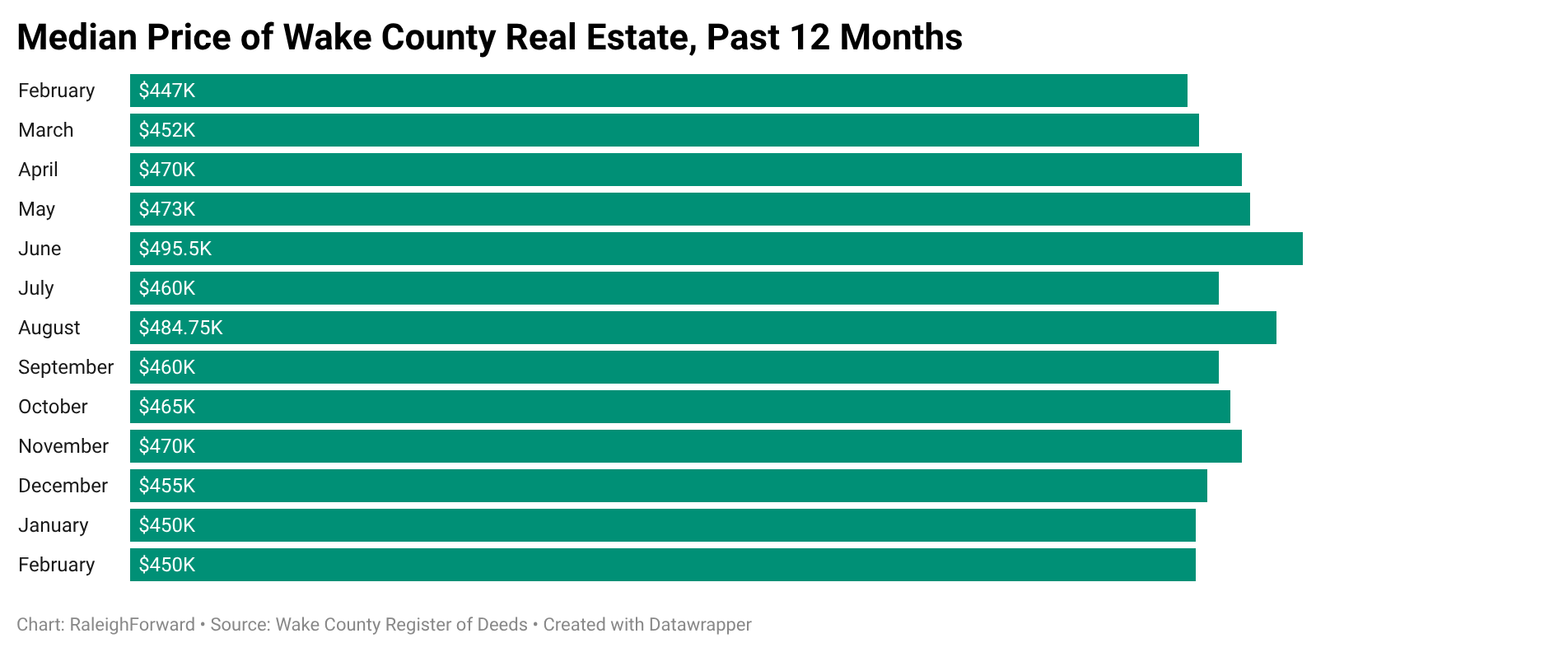
From the Data Department:
Raleigh City Council’s next meeting is Wednesday, March 17, 2026. Here are a couple of items to keep an eye on:
Other items of interest:
The Mayor’s State of the City Speech will occur on March 18. For more details, click here.
Council continues work on the next City Budget. The next Budget work session is scheduled for April 6 at 4:00 pm. Click here for details.
Click here for the latest City Manager Report. Worth noting is a memo in the latest Manager’s Report that discusses how rents impact homelessness. This is particularly relevant as Raleigh continues to try and encourage the construction of more housing.