
April 5, 2026 Newsletter
To receive these updates directly to your inbox, subscribe on Substack.
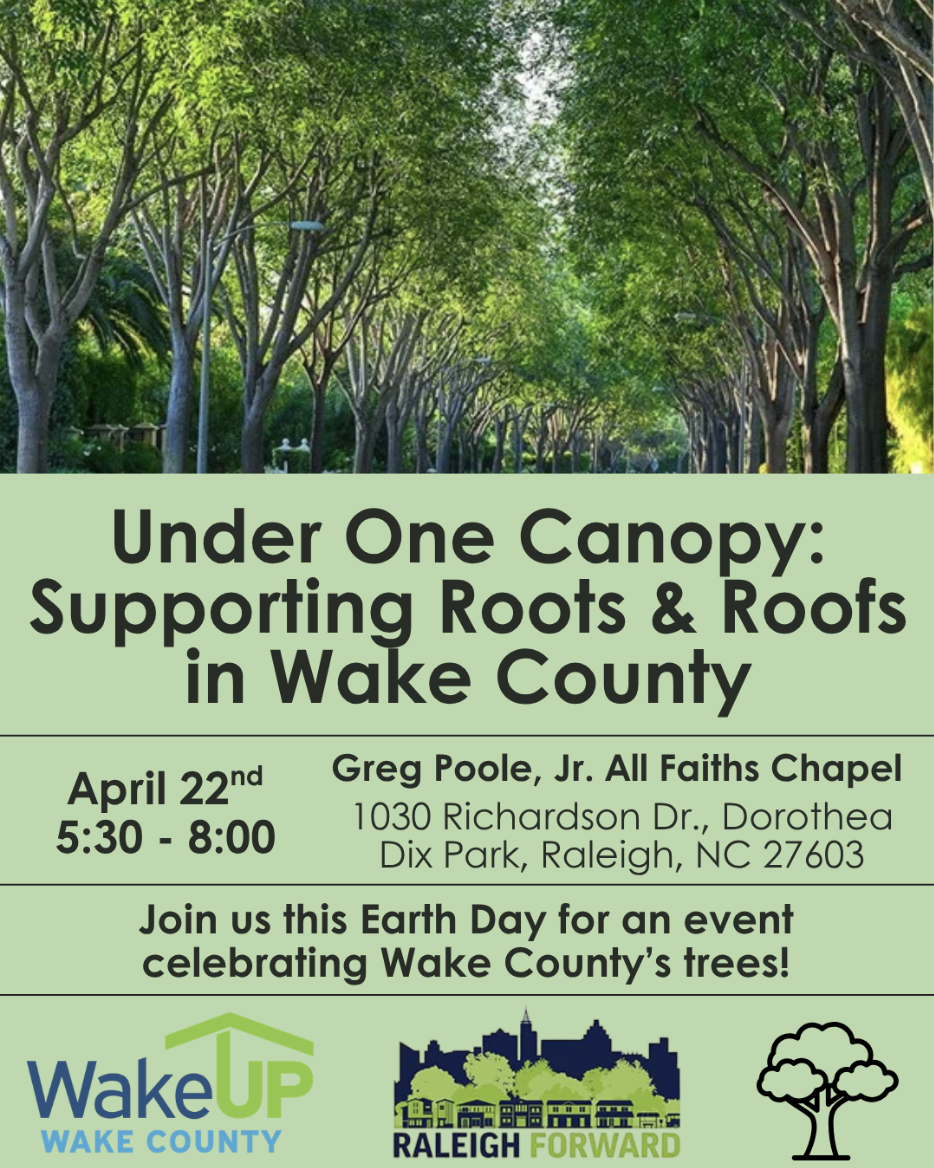
Join RaleighForward, Wakeup and CityBuilder on Earth Day for an event celebrating Wake County’s trees! Sip on refreshments and mingle with your neighbors while learning about the importance of Wake County’s urban tree canopy. Leading experts will showcase research-based strategies anyone, from individual residents to policymakers, can take to be good stewards of green spaces in a rapidly growing region. Topics will range from the latest Wake County tree canopy assessment to healing our environment one back yard at a time. Leave with an understanding of how policies that improve environmental resiliency can support sustainable and intentionally planned growth – and bring home a tree seedling to plant in your own yard!
A Property Tax Levy Cap Would Make Raleigh (and all NC Local Governments) More Fragile, Not More Affordable
North Carolina lawmakers are considering a constitutional amendment that would empower the General Assembly to impose limits on how much cities and counties can increase their property tax levies. The current draft from the House does not set the cap itself. Instead, it is likely a placeholder while members negotiate a more complete version of the proposed levy cap. In whatever form may ultimately be agreed upon, the ultimate ballot question is currently proposed for the November 3, 2026, general election.
A levy cap limits the total property tax revenue a city or county can collect. Municipalities must then calculate their annual property tax rate based on this cap. Levy caps are often seen as more restrictive than rate caps since they cap revenue generation regardless of changes in the tax base, especially in rapidly growing areas. Typically, levy caps include adjustments for inflation and population growth, though population changes don’t cover indirect costs from infrastructure-heavy uses like data centers or high tech and pharmaceutical manufacturing. Some levy caps exempt public safety and school funding, and some allow communities to seek voter approval for increases beyond the cap, either generally or for specific projects such as affordable housing.
Read the full blog post on the RaleighForward website.
Articles of interest this week:
Bangor Group Gets $2 million from the federal Government to Build Tiny Village for Homelessness.
Developers Win Class Action Certification in Impact Fee Litigation Against City of Raleigh.
New Jersey’s Push for Affordable Housing in Every City Divides neighbors.
Virginia General Assembly says ‘yes’ to “Yes in God’s Backyard.
Bonus read from the New York Times: 36 Hours in Raleigh, N.C.: Things to Do and See.
From the Data Department:
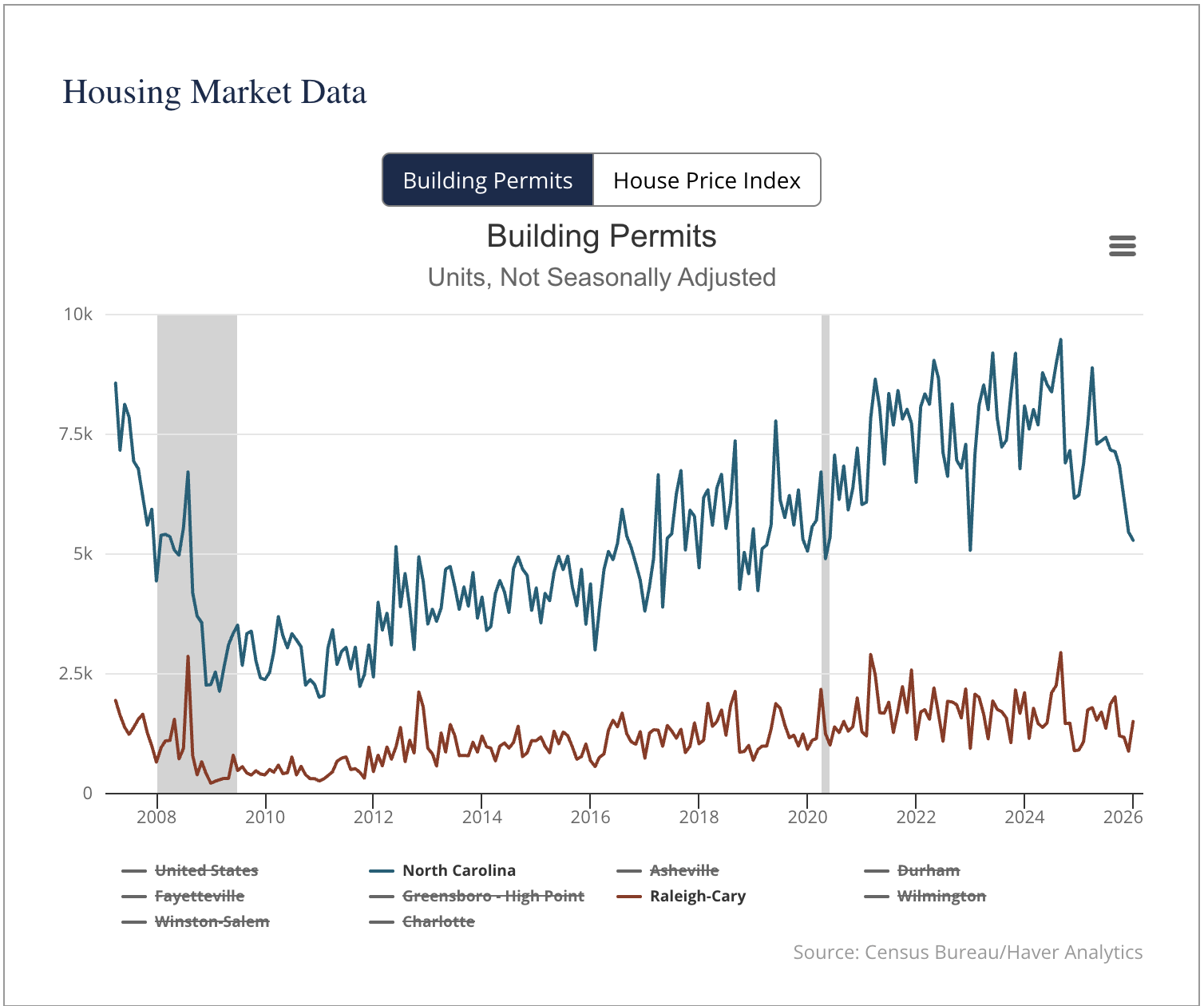
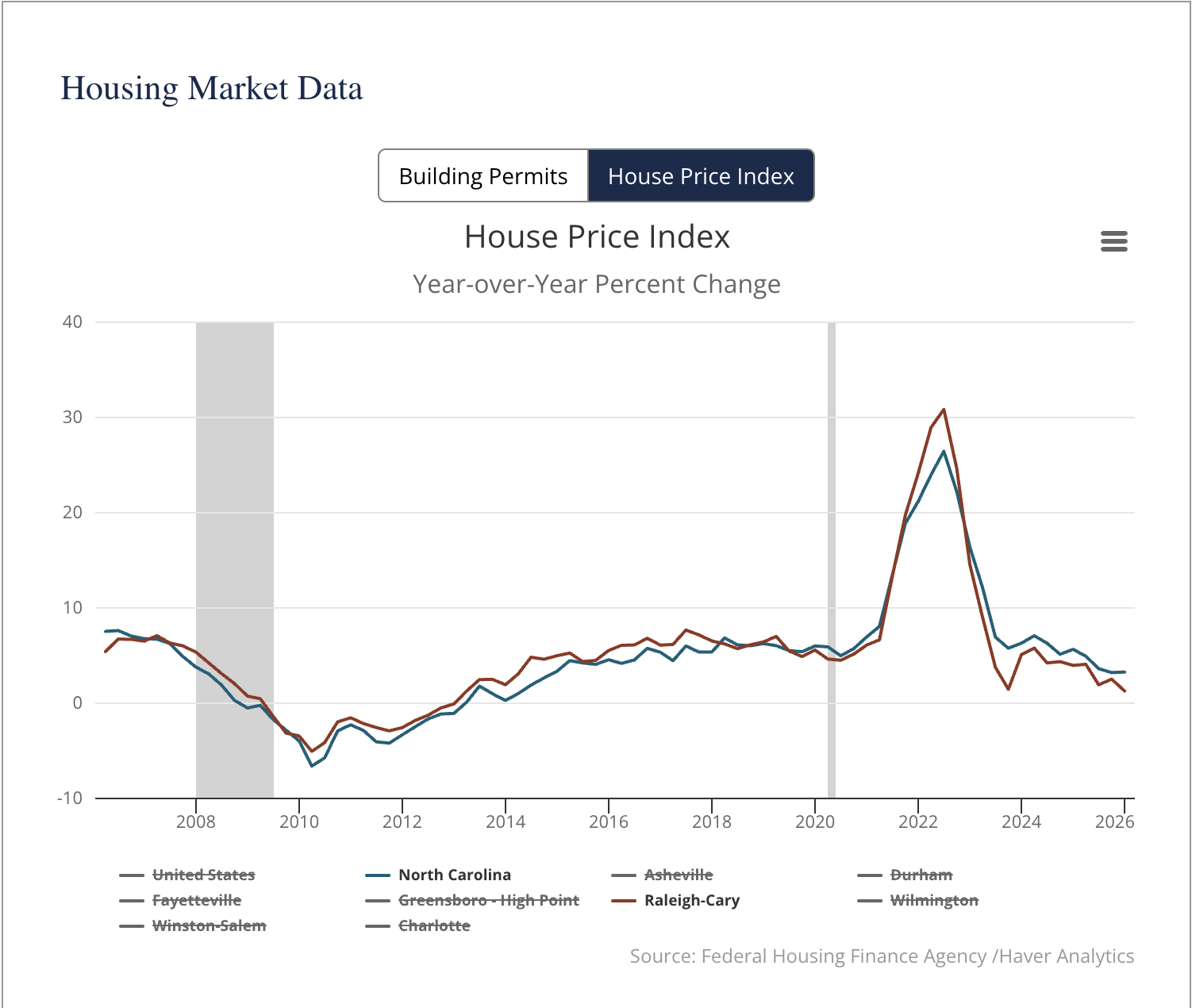
The Richmond Fed has a great data dashboard. Click here to check it out.
Raleigh City Council’s next meeting is Tuesday, April 7, 2026. Here are a couple of items to keep an eye on:
Other items of interest:
Council will conduct its next budget work session on Monday, April 6 at 4:00 pm in Council Chambers.
Mayor Cowell presented her second State of the City Address on March 19. The Mayor highlighted the City’s green infrastructure, as well as its social infrastructure like parks and greenways. To view the entire address, click here.
Click here for the latest City Manager Report.